Spending on employee training is growing fast.
By the end of 2024, it’s expected to reach a value of over $400 billion globally – up from $383 billion the year prior.
There are a few ways we can explain this trend: Modern workflows have brought about increased use of specialized digital platforms, requiring specialized knowledge to use. Then there’s the tough economic conditions which are putting pressure on businesses to not just attract but retain and upskill existing talent to address skill gaps.
Whatever the reason, it’s clear that businesses are increasingly willing to invest in their teams’ learning and development. And this is a trend we’re seeing around the world.
However, the nature of the training industry makes providing such opportunities to your employees difficult.
With trainings increasingly being sold through digital channels that reward prompt, early payment – often requiring the use of credit cards – it pays to be agile.
But traditional payment methods aren’t fit for this purpose, and so businesses regularly lose out on early-bird discounts or even a chance to attend classes with limited placements.
Employees usually aren’t supposed to make partial advance payments either, as this would lead to chaos with billing.
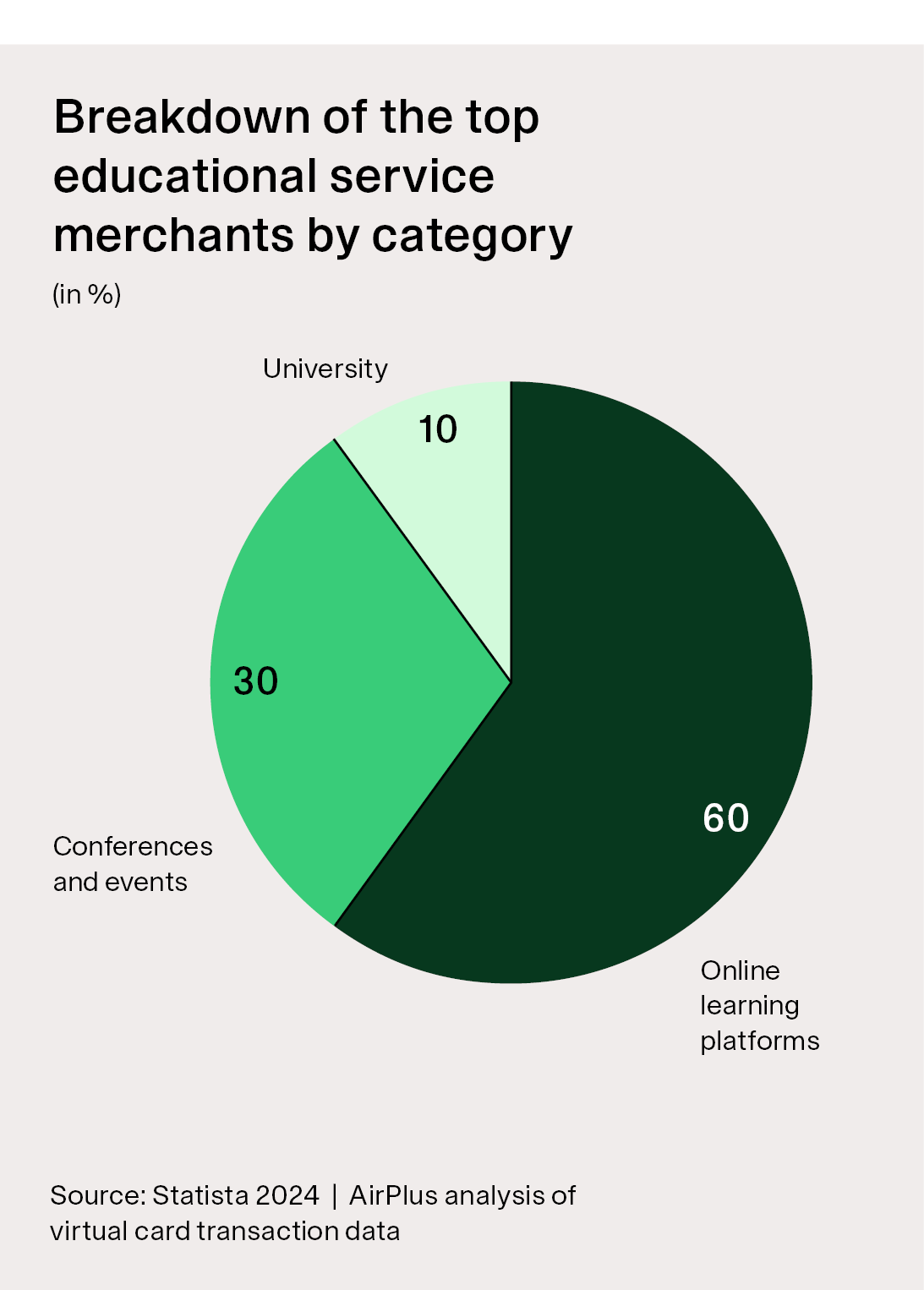
The data shows this trend towards online trainings in action.
Online learning platforms made up the majority of learning and development spending among AirPlus Virtual Card users.
These platforms allow employees to learn and develop specific skills while earning industry-recognized certifications. These range from broader skills relating to project management and Scrum, to software-specific training from providers like Microsoft and Udemy.
Traditional training venues like conferences and events, as well as universities, are still popular for employees. But what remains constant across the board is the use of online payment channels where cards are most convenient.
Physical credit cards have their drawbacks: Not all employees have access to their own credit card, and so payment must be made by others or card details shared around – hardly a convenient or secure solution.
That’s why we’re seeing more and more businesses turning to virtual cards to make these payments.
Let’s take a look at why
The benefits of virtual cards at a glance
Convenient and secure payments
Easy centralization of diverse expenses
Straightforward handling for employees and accounting teams
Efficient administration, processing, and settlement
Dynamic control and transparency
Individually definable card limits
Why you should use AirPlus Virtual Cards Procurement for your employee training payments?
Quick card generation
Generating virtual cards is quick, enabling you to utilize early-purchase discounts and take part in trainings with limited availability

Centralized payment
Employees do not need to pay in advance out of their own pocket, therefore removing the need for lengthy reimbursement processes

Easy allocation of costs
DBIs allow for clear allocation of costs thanks to the inclusion of data such as training provider, participants, cost center, and more

More transparency
Gain a clear overview over training expenses for better budgeting and identifying potential negotiation opportunities

Employee empowerment
Virtual cards are the attractive and secure way for enabling your employees to book trainings and take advantage of education offers

Fraud prevention
The inherent security of virtual cards prevents their misuse after paying for the training

“Travel expense statements are a lot of work for the traveler, travel manager, and financial accounting department. If expenses are paid using someone‘s personal credit card or cash, it gives rise to a lot of manual work after the trip.”

AirPlus Virtual Cards Classic can save you time and money. All purchases made with AirPlus Virtual Cards are compiled into a single, central statement with no need for a travel expense report for each individual employee. The additional information supplied for each transaction makes it easier for you to allocate costs later on, meaning less work for the accounting team and the traveler alike.
“A lot of time and effort go into the booking and reconciliation processes. I want as many processes as possible to be automated to streamline these processes and save time.”
AirPlus Virtual Cards are integrated into more than 80 booking platforms. This makes it possible for the whole card generation and payment process to take place seamlessly in the background when you book with your preferred booking engine or back-office system.