The new year is finally here, and with it comes new requirements and considerations for your business travel program. Here is a breakdown of the most important things to know:
Download your free
|
1. Updated entry and border processes
Over the course of 2026, new entry and border processes and requirements will be introduced.
Most notably, the EU will be introducing the Entry/Exit System (EES), and the European Travel Information and Authorization System (ETIAS).
The Entry/Exit System (EES) is a new automated IT system for border control in the Schengen Area that will be fully implemented by April 10, 2026. It requires non-EU nationals to provide their biometric data when they first enter the region for a short stay of up to up to 90 days within any 180-day period. [1]
The European Travel Information and Authorization System (ETIAS) is the new travel authorization system for visa-exempt travelers to enter 30 European countries. It’s planned to be introduced in the last quarter of 2026, and will require visa-exempt travelers to apply for prior authorization to enter the countries in question. [2]
Business travelers should be informed about these new requirements and whether either applies to their upcoming trips. If so, it would be important to allow more time when preparing and potentially extended waits at the border.
2. CSRD and sustainability reporting
The Corporate Sustainability Reporting Directive (CSRD) is a regulatory framework that requires EU companies to report on a wide range of factors relating to sustainability and societal impact. It is currently being rolled out over the next couple of years, with large EU public-interest companies previously subject to the NFRD already being required to report.
For the purposes of business travel, it necessitates, among other things, the reporting of scope 3 emissions – indirect emissions from sources that are not owned or controlled by the company or organization, but are related to its activities, such as suppliers, customers, and business travel.
Both travel management and sustainability teams will need to coordinate to ensure all necessary data is tracked and in the correct format to ensure it’s audit ready.
3. E-invoicing and expense processes
With the implementation of the E-invoicing Directive, more countries are requiring the use of electronic invoices. Many countries such as Italy, Hungary, and Belgium have made it mandatory for B2B invoices to be accepted and issued electronically – and in specified formats.
Travel management will need to ensure that the travel and expense platforms they use are e-invoice compliant, making it easier to align with finance and other teams within the company. This may also be necessary with hotels and mobility providers that travelers use while on a work trip.
4. IT and data security
Cybersecurity remains an important topic for businesses in 2026. And as cyber threats continue to evolve, so too do your data security guidelines. This is especially true when on the road.
On top of regularly strengthening IT and data security policy, it is necessary to review and update security guidelines for travelers. This should cover your VPN & Mobile Device Management setup, responsibilities in case of security incidents, and other relevant data security topics.
Perhaps most importantly, travelers should be regularly made aware of common security issues and data risks they may face.
5. Modal shift and cost impact
With all the focus on sustainability and cost of business travel, travel policies will likely need reviewing for 2026. This should include everything from the way they get around to when it makes sense to travel. Here are a few of the different considerations worth looking into:
- Rail-first policies are increasingly common in the EU. In fact, countries like France have introduced a ban on certain short-haul flights where the same journey can be taken by train in under two and a half hours. Companies are now also considering a change to their corporate travel policy where short- or mid-haul trips need to be taken via train (after assessing travel time vs. costs).
- Flights are also becoming more expensive. As well as the introduction of systems such as ETIAS which will add additional costs for non-EU visitors, mandates for the use of Sustainable Aviation Fuel (SAF) will see fuel costs increase – this is likely be passed onto travelers. Other factors include the phasing out of free emission allowances under the EU Emissions Trading System (ETS).
All this together will make business travel more expensive, which needs to be accounted for in your budget.
6. Local taxes and charges
Yet another consideration for business travel programs is the changing landscape of taxes, charges, and other fees.
City and accommodation charges in particular have become increasingly prevalent – and where they previously existed, more expensive. Factors such as increasing demand, inflation and other external factors are playing a role in this.
Ultimately, it is necessary to stay on top of these changes and, if necessary, review and adjust expense guidelines and reimbursement rules accordingly. This should be communicated with travelers to ensure they are not caught off guard.
7. Tools and automation
Finally, we have the tools we use. New technologies and innovations are bringing about new opportunities to streamline payment and travel management processes.
AI has many potential uses in business travel management. This can include re-routing travelers for the most optimal itinerary or even as a means to check your travel policy. Make sure to check your travel tools to identify any useful tools and review whether they work for your needs.
With all the reporting changes for 2026, automation will also play a key role in ensuring you meet the reporting requirements, whether that be CSRD obligations or day-to-day expenses.
Otherwise, consider the feedback you received from travelers and other stakeholders in 2025 – this is particularly valuable and can be used to optimize tools and processes for the future.
Free business travel checklist 2026
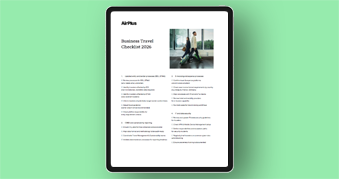
Ready to tackle the changes to the business travel market in 2026? We have developed a quick and easy checklist for you that covers every important topic you need to consider to stay ahead of the curve.
[1] https://travel-europe.europa.eu/ees/what-is-the-ees
[2] https://travel-europe.europa.eu/etias/about-etias/what-is-etias

.jpg?width=375&height=180&name=Article%20Blog%20banner%20-%20Corporate%20Liability%20(1).jpg)

.jpeg?width=375&height=180&name=AdobeStock_602920660_(1).jpeg)